Showing posts with label weeds. Show all posts

Thursday, March 8, 2012

Weeds Are Us

I have been reading a wonderful garden memoir by Michael Pollan called Second Nature, A Gardener's Education. In it he muses that "weeds are us." Every gardener who has prepared the spring garden for planting knows the headache of fighting the weeds. I am blessed not to have to deal with some of the horribly invasive weeds (bindweed, pigweed, kudzu, et cetera) but I have discovered some strange universal truths of weed behavior that Pollan outlines as well. Weeds take purchase in empty soils and many times they do not seem to care if it is good soil or bad soil:

"Weeds, contrary to what romantics have assumed, are not wild. They are as much a product of cultivation as the hybrid tea rose . . . The do better than garden plants for the simple reason that they are better adapted to life in a garden . . . weeds have evolved with just one end in view: the ability to thrive in ground that man has disturbed" (Pollan 109).

A garden is thus a responsibility; if you wish to tend garden and plant glorious flowers and delicious vegetables, the price you pay will be to weed, and continue to weed until you can hardly see straight anymore. After my first spring/ summer season of vegetable gardening, I was exhausted and let the vegetable beds go completely fallow: no ground cover, no cover crops, no nothing at all. My lack of foresight was rewarded, or rather, richly punished. Through the rainy season, the weeds germinated and grew, some so large that their trunks were thicker around than my wrist! At my wits end, we hired some temporary help to pull them out and in the process, removed a portion of our rich topsoil. Talk about adding insult to injury!

The next fall, we tried the cover route, covering the beds with newspaper and mulch. This seemed to work reasonably well, although we had a few cracks in the cover that resulted in weeds. It was better than doing nothing but it was a heck of a lot of dirty and back breaking work. (Shoveling mulch off the back of a truck and bending over to paper the ground didn't strike me as fun.)

This past rainy season, I let go of the complete laissez-faire approach and stayed in the garden throughout the winter. I had made some decisions that kept me from becoming burned out over the summer, so I still had energy and drive to spare going into the fall. Like the previous year, I choose to keep 2 of my 7 beds fallow, but instead of covering them with paper and mulch in the fall, I planted wildflowers: johnny jump ups, daisies, California golden poppies, purple lupine, nasturtiums of every possible hue, and a mismatch of others. After carefully weeding out the winter weeds: the grasses, dandelions, nettles, and other pernicious plants, I have a gorgeous blanket of bold and color clashing flowers - and they needed no tending except some occasional weeding and a dash of water when the rains were insufficient.

Only two of the beds were given over to the wildflowers. Another two were left in cultivation of winter vegetables I have been using in recipes. The final three were left to their own devices. Hubby used the electric trimmer and decimated the weed population while I raked up their corpses and seeds. He will double dig these beds later this month to kill any remaining root systems and I will add the compost and pasteurized manure to amend the beds for spring planting.

Consider weeding a on-going meditation; it will never be complete, but neither is prayer. Some chant, some pray rosaries, some read inspiring passages. I spend the time on my knees (like so many of the devout) pulling weeds with gloved hands. It remains my meditation and my penance, for if I want a tamed garden, this is the price I must pay. Pollan says that "Weeds are not the Other. Weeds are us." And perhaps they are, for we provide the spaces and the means for them to flourish and travel across our landscape. But if I am going to be called a weed, let me be one of the omnipresent nasturtium, flowering on the urban hillsides in the early spring sun after receiving the nourishment of the winter rains.

Cultivation (cabbage in foreground) and untamed color (wildflowers in background)
I have no idea how this nasturtiums became striated, but it is a beautiful effect.
I have every possible color of nasturtium
Detail of nasturtiums
I allow nasturtiums to grow as "weeds" under my roses.
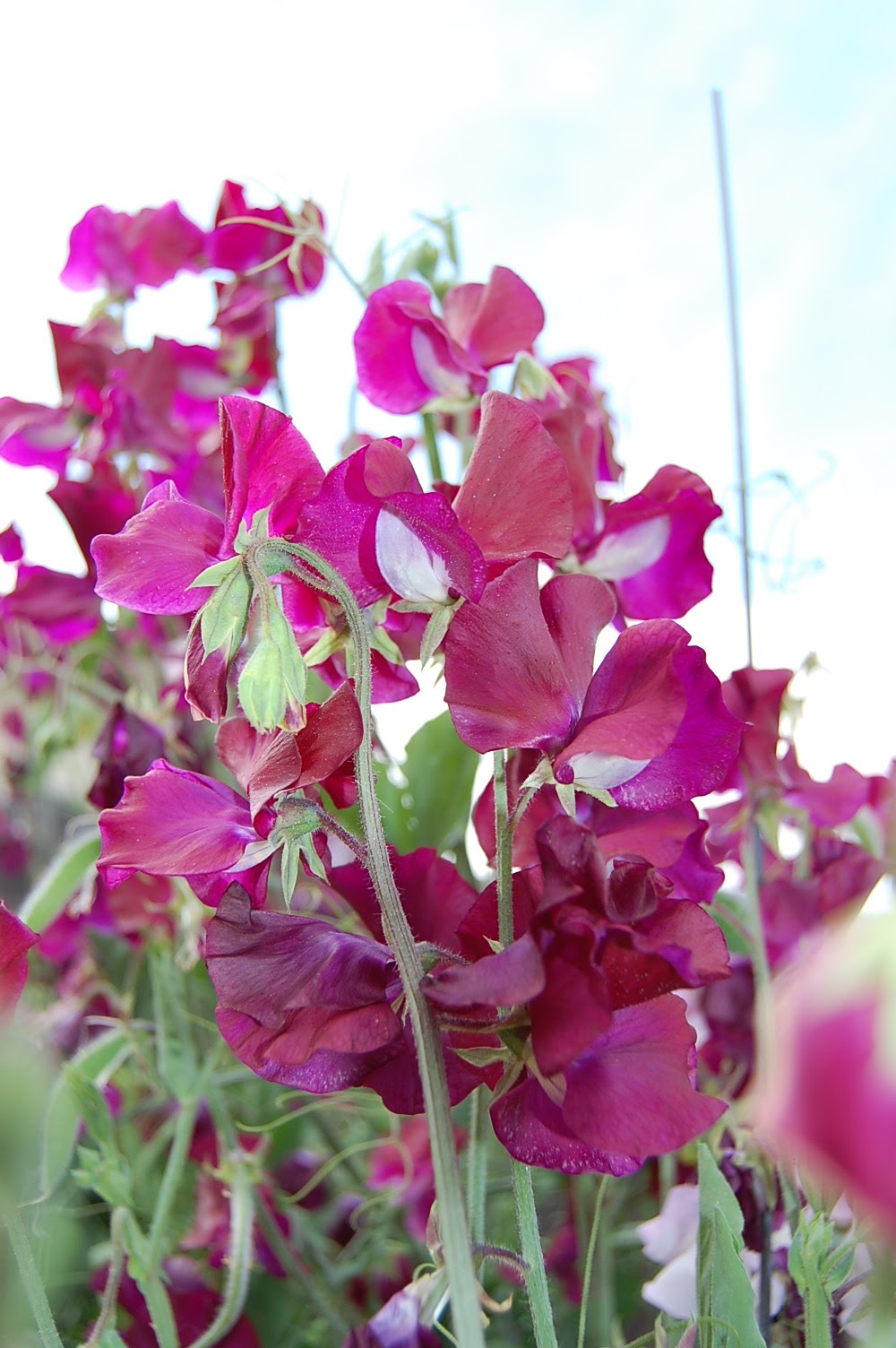
Dandelions and sweet peas side by side, both uncultivated.
Dandelions bunch up against  my plumeria.
Weeds aren't all bad - their seeds feed the birds.

Saturday, April 9, 2011

Dazzling Successes and Epic Fails

The purpose of my blog is in part to dole out advice on vegetable gardening; it is also a record of my (mis)adventures in gardening that I hope entertains as well as informs. But at the risk of sounding too high and mighty, I feel I need to knock myself off my perch of gardening know-how. I’ve had great successes in terms of amount and quality of vegetables harvested, but I’ve also had some epic fails. In some of my endeavors, the jury is still out. But I like to think I can learn from my mistakes.

My previous weed abatement attempts have been dismal. My first sin was pride; who am I to completely counteract millennia of weed evolution? My second sin was using the wrong tools. I used two types of weed control fabrics to cover my seven vegetable beds. The first type was black, permeable to rain, but not to smaller particles. This kind worked reasonably well, only the most determined weeds poked through the surface of the material. The second weed control fabric was white and gauzy, opaque enough that the sun’s rays could penetrate its filmy surface and give weed seeds the chance to germinate. And germinate they did, in spades. Ever the recycler in the garden, I plan to reuse the black weed cover fabric for parts of the garden next fall. The opaque fabric can be used as a shield to protect lettuces from the full strength of the summer sun, but it will never ever again be used as weed guard.

About two weeks ago I orchestrated moving my herb garden including mature rosemary and Cleveland sage bushes. I wanted the herb garden closer to the back door for easier access. I also wanted to re-purpose the bed (vegetable bed four of seven) to serve as Hubby’s new home for his collard greens and my cucumber trellis. Alas, I did not know it then, but in the transplant process, we had damaged the root balls beyond repair. First, the sage and rosemary drooped, then they withered, then they burnt to a crisp despite plenty of watering. Replacement was the only option, so off I went to the local nursery. I have planted the new sage and rosemary seedlings in their new home. Hopefully I can train them to conform nicely to their new space. In the meantime, I’ll have to make do with my dried herbs until they grow large enough to safely provide fodder for my spice rack.

As for my attempts at growing perennial flowers, the jury is still out.  I started my second planting of cooler season vegetables, including perennial flower seeds, in February with some success. I have radishes galore and my carrots are beginning to make an appearance. I also have a significant amount of ‘volunteer’ tomatoes, the children of last year’s crop. The humor is not lost on me; I plant lettuces, broccoli, carrots, and flowers and the first thing that comes out of the ground is tomatoes. Though the vegetables are making their appearance, it is harder to discern the flowers from the weeds. I think I see a couple of suspects, but only time will tell if they are really the hollyhocks, black-eyed susans, butterfly bush and yarrow that I originally planted. I have high hopes though, and that is the promise of a seed, that it will germinate in the future.

Tuesday, April 5, 2011

Extending the Pretty

It is hard not to become overwhelmed by the sheer amount of work my garden needs to produce vegetables and maintain a beautiful appearance. The winter weeds are still insidious, the slugs are munching my tender sprouts, and rain threatens to flatten my tomato seedlings. When it comes to dealing with cleaning up the garden, I have adopted a new philosophy called Extending the Pretty. I have separated my garden into zones, starting first with the patio area, and focus on making that zone pretty. Each time I work in the garden, I extend that zone. When I feel frustrated I go back to the pretty patio zone, have a glass of water, relax and smell the roses and sweet peas. (All pictures are of my beautiful, relaxing patio.)

Using this strategy, I have cleaned up the patio, the butterfly flower garden, and the first of three of seven vegetable beds, starting on the west side of the yard and moving toward the east. The west side is beauty, vibrant and fragrant roses and sweet peas, happy accident nasturtiums blooming red, orange, and yellow, lavender blowing in the breeze.  The east side is beast, ugly, seedy weeds growing wild and some half dying in an ill conceiving poisoning attempt, piles of yard refuse waiting to be tossed in the garbage, and multiple scattered tools in need of a new home in a tool shed.

Since Hubby spend last weekend playing with hot rods, he agreed to help me in the garden this weekend. I plan to send him to the east side with a flat head shovel to slice weeds. (If he needs a machete, we do have one!)  I will continue to clean up the remaining four of the seven vegetable beds and will renew my weed poisoning campaign against the weeds breaking through my brick hardscape. Sometimes you just have to resort to chemical support.

Wednesday, January 19, 2011

Winter in So-Cal (January Bloomday)

While so many are under ice and snow, Southern California basks in the relative warmth of a Mediterranean climate.  Many transplants from the northeast often complain about the lack of seasonality in our weather, but as a native, I know better.  Our winter is very different from the traditional American ideal; it takes more observation to see the subtlety.

Our winters vacillate between being cool and dry or cool and wet, depending on the development of La Nina or El Nino.  La Nina makes the ocean waters off the coast colder and causes Southern Cali to have a dry winter. El Nino is the opposite, causing warmer coastal waters and giving us ample to a deluge of rain. This year has been unique, despite La Nina conditions, we are over the average amount of rainfall for this time of the season thanks to the pulse of arctic storms blasting their way south.  Average rainfall is also a misnomer; for most times we either surpass or have very little rainfall. The “average” is merely the adding the sum of the extremes and dividing by a given number, practically signifying nothing.  For instance, I belong to the generation of California kids who grew up during a seven year drought. When it finally began raining again in earnest, we looked up in to the sky and asked, “What the hell is this?”

With rain, comes greenery, and winter is our green time of year. Our normally dust-colored valleys and hillsides grow lush and the native wildflowers receive the water they need to for their spring rebirth. Rain also provides for opportunists, the weeds. I finally have the upper hand in this battle, using both the spray and pull methods. Here's hoping I can keep them under control.

Friday, December 31, 2010

Call in the Clean-up Crew

So much for having a La Nina year – this season has felt as wet as any El Nino year that I can remember, at least so far. My Midwestern relatives laugh, “how can just a couple inches of rain cause such a ruckus?” Well, this is Southern California, we don’t drain, we flood.  Despite road closures, cliff collapses, and downed trees in many parts of the county, the Victory Garden has weathered the storm mostly unscathed.

In the days between storm fronts, Hubby and I spent a couple of hours a day cleaning up. Hubby spent his time in the eastern side yard where we have our fruit trees. The tangerine tree, while vigorously producing fruit, was being pulled down by the weight of its own branches. One branch had started breaking and was cutting into the heart of the plant with a vicious split. Hubby cut off the heavy branches and mended the painful split in the trunk. We do not have space in the garbage cans for all the branches, but I hope that our neighbors will help us harvest and eat the fruit at least. For the time being, he piled the branches on the concrete pad adjacent to the tree. Hubby also trimmed back the pink heather, jasmine, and pomegranate. After spreading the newly shorn mulch around, he was ready to call it a day.

Meanwhile, I was completing massive amounts of weeding. I pulled buckets of thick stemmed dandelions out of the soil, still wet with the previous day’s rain. I have to admit, the tactics I used in Putting the Garden to Sleep didn’t work for weed abatement.  The cover I used was semi-opaque and allowed enough sunlight for the weeds to successfully germinate. Oh well, you live, you learn. Next year I will change tactics and use sheet composting and nitrogen enriching cover crops (more on that later). By the time I finished with the last bed I was wet, muddy, and my back ached from stooping over to pull weeds. I saw some really good signs of healthy soil – earthworms galore, many of them still young and small. I covered them back up with dirt to protect them from the birds.

I rounded out the day planting some more seeds in my butterfly garden: foxglove, black-eyed susans, butterfly flower, and yarrow. I know it is a bit early, but the seeds will germinate when they are ready, hopefully before the monarch return in their northward migration. I then planted more peas, radishes, lettuces, and nasturtiums. Seed planting is such a joy, like painting with spade rather than brush and with the lovely anticipation of what will pop out of the ground with the warming of the spring earth.